01 · IN DANGER NOWSeek emergency help if it is safe to do so.
Check the country you are in using the selector at the top. The police or emergency services link opens your dialer. This page does not send an alert or share your location with the police or emergency services.
If it is not safe to call, look for a safer way to get help without increasing the risk to yourself.
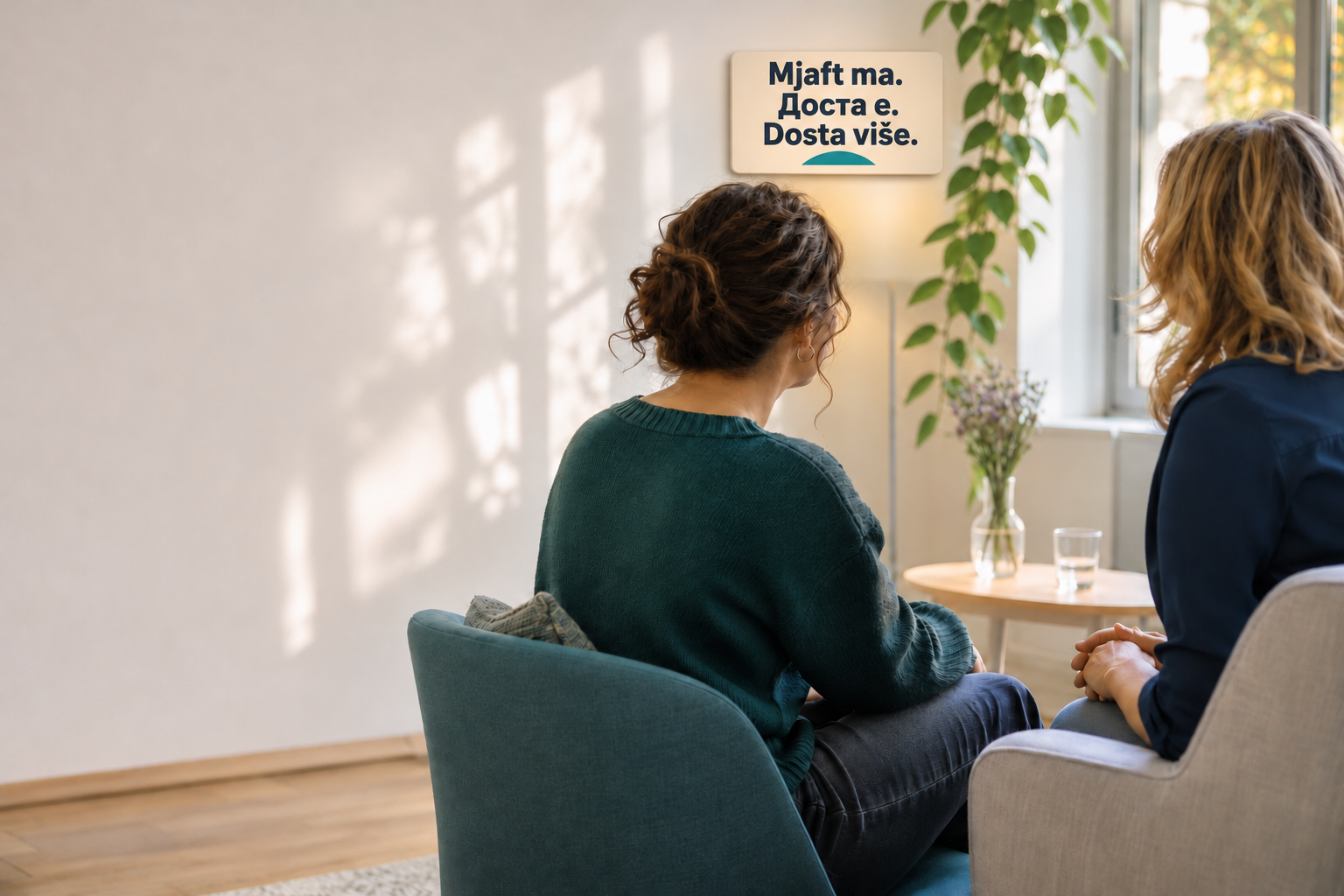
02 · HUMAN SUPPORTChoose someone who can listen without judgment.
This could be a trusted person or a professional from social services, healthcare or victim support services. Ask how you can communicate safely and what support is available.
This page does not accept cases, and enrollment in the program is not open. For a specific service, verify the provider and how to contact them.
03 · PERSONAL SAFETY PLANPlan around your situation, not other people’s pressure.
With a professional, you can think through a trusted contact, a safer place, ways to communicate and practical needs. Consider any children or other people who depend on you, too.
Do not make changes or save a plan on a monitored device if doing so could put you at risk. Leaving or reporting abuse requires an assessment of your situation; this page does not push you toward a single decision.
04 · DIGITAL SAFETYTake care with your device and how you make contact.
If you suspect your device or accounts are being monitored, use a safer device when you can. Avoid sudden changes that could increase the risk.
“Quick exit” opens a blank page, but it does not erase your history, downloads or network traces. Private browsing does not hide everything either.
This page has no form for accounts of abuse, safe addresses or personal documents. Reading this guidance does not submit a request for help.
 +